Keywords
statehood
sovereignty
How to Cite
Abstract
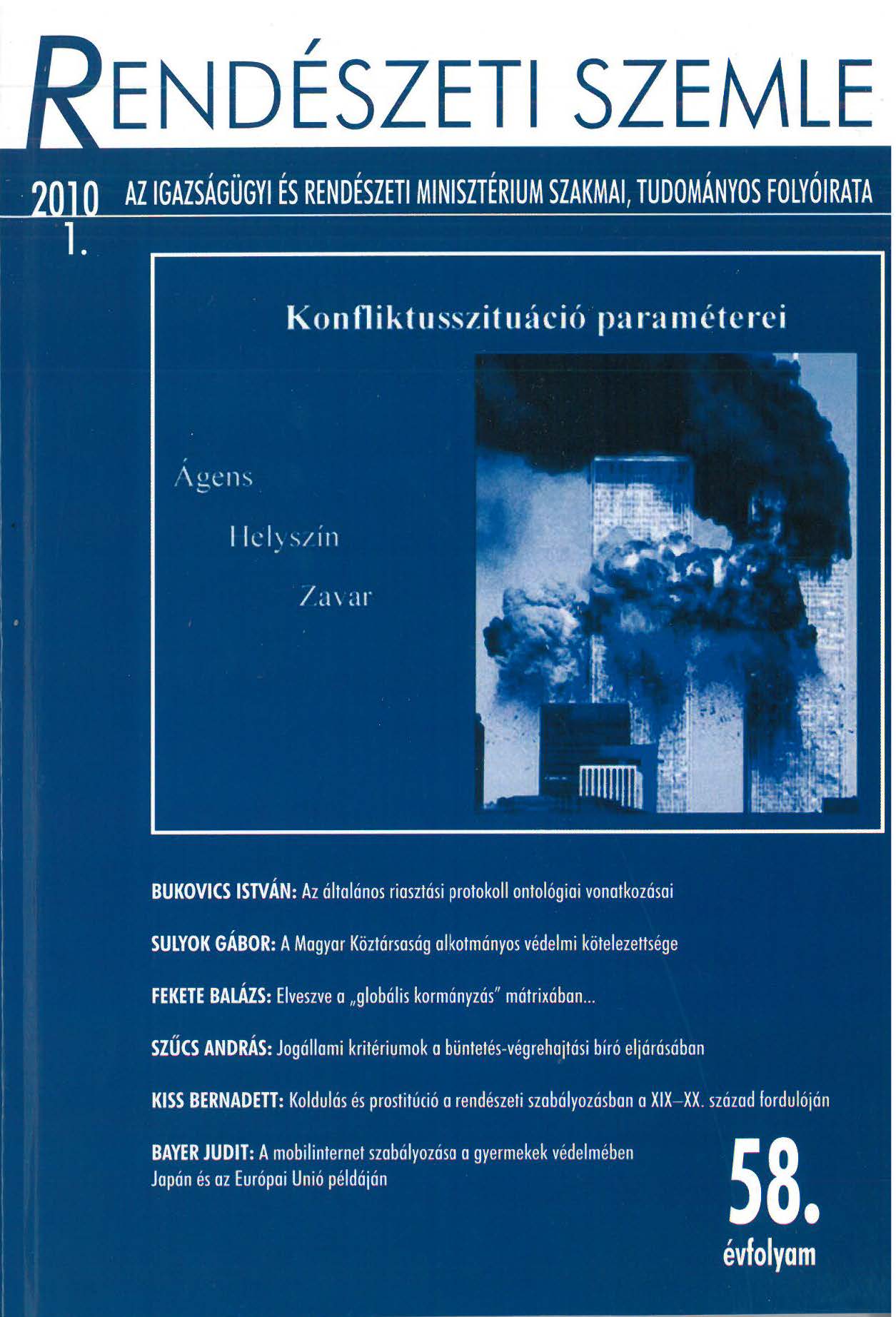
The study examines the transformation of statehood in the era of “global governance.” The author compares the Weberian and Jellinekian ideal types of the modern state with the new, multi-actor decision-making structures emerging through globalization, where markets and global civil society have become key players alongside states. He highlights that the differing logics of the economic and political dimensions create constant tensions, while legal sovereignty is gradually eroding. The study concludes that the role of the modern state is undergoing significant change, potentially leading to the emergence of a new historical type of state.
References
.

This work is licensed under a Creative Commons Attribution-NonCommercial-NoDerivatives 4.0 International License.
Copyright (c) 2025 Academic Journal of Internal Affairs